Digital Transformation
Custom Website Development for Business: When You Need It and How to Build It
- Published
- Reading Time
- 5 min
- Topics
- Digital Transformation
A custom website is designed around your business's needs rather than taken from an off-the-shelf template. The result is a website that is easier to grow, more secure, and better at turning visitors into customers.
This article covers the signs your business needs one, how a website supports growth and online sales, the stages of building it, and how to choose the right development partner.
What is custom website development?
Website development is the process of designing, building, and maintaining a website so it meets the needs of a business and its users. It covers user interface (UI) and user experience (UX) design, front-end and back-end development, and testing for performance and security.
With a custom website, all of this is designed specifically for your business instead of being taken from an off-the-shelf template. The difference shows up in a few ways:
- Features follow your business needs. You aren't limited to what a template ships with. A fashion business, for example, could add a virtual try-on feature, while a restaurant could offer online ordering with scheduled delivery times.
- A more focused user experience. Design and navigation are shaped around how your own customers behave, so they find what they're looking for more easily.
- Room to grow. You can start with a simple website, then add e-commerce, a booking system, CRM integration, or a loyalty program as your business grows, without switching platforms.
- Security tailored to your needs. For websites that handle transactions or customer data, protections such as SSL encryption and two-factor authentication can be built in from the start.
Signs your business needs a custom website
Timing matters. Rushing means important details get missed, while waiting too long means missed opportunities. A few signs the time has come:
- Your online presence is thin. If your business has no website or relies only on social media, customers aren't getting complete, convincing information about you.
- Growth has stalled. Potential customers may be struggling to find information about your products or services online.
- It's hard to reach new customers. A website opens the door to customers in other cities, or even other countries, that offline efforts can't reach.
- Competitors got there first. If your competitors already have good websites, you need to catch up. Studying their sites also shows which features you can adopt and improve on.
- Manual processes are weighing you down. Orders, payments, and record-keeping that are still handled by hand are strong candidates for automation through a website.
Starting early also helps you manage your budget. A website that is designed well from the outset spares you costly fixes later on.
How a website supports growth and online sales
Building credibility
Many consumers research online before they buy, and they judge how serious a business is by the look and function of its website. A company profile page, clear contact details, testimonials, and transparent product reviews all help build trust. Customers generally trust a business with an official website more than one that only exists on social media.
Expanding reach and anchoring your marketing
A website optimized for search engines is easier for potential customers to find. It is also where your digital campaigns lead, whether from ads, email, or social media. Campaigns work far better when they point to pages designed to convert.
Making transactions easy
A simple, secure checkout has a big influence on purchase decisions. Offer a range of payment methods such as bank transfer, e-wallets, or credit cards, add a shopping cart and wishlist, and protect customer data with SSL.
Increasing engagement and efficiency
Live chat, contact forms, and relevant content, such as quality product photos, demo videos, and blog articles, encourage visitors to engage. Internally, a website connected to your other systems can automate ordering, payments, and even inventory management.
The stages of building a custom website
A custom website comes out of close collaboration between you and the development team. In general, the stages are as follows:
- Needs analysis and planning. Define the website's goal (selling, building credibility, or providing information), identify your target users, and study competitors' websites. The result is a project plan covering budget, timeline, sitemap, and technical specifications.
- UI/UX design. Start with wireframes for the page structure, then interactive prototypes to test usability, and finally a visual design that matches your brand identity. Make sure the design is responsive on every device.
- Development. The front end builds the screens and interactions visitors see, the back end manages data and system logic, and API integrations connect the website to other services such as a payment gateway.
- Testing. Check that every feature works, the layout looks right on phones and desktops, pages load quickly enough, and there are no security gaps.
- Launch and maintenance. Once live, the website needs regular content updates, bug fixes, and performance monitoring, especially as traffic grows.
Tips to get the most from your website
- Choose reliable hosting so your website stays fast and stable.
- Put the mobile experience first. Many customers visit websites from their phones.
- Apply basic SEO practices, such as clean URL structures, meta descriptions, image alt text, and relevant keywords.
- Use analytics to track traffic, conversions, and visitor behavior, then improve based on the data.
- Update your content regularly so visitors have a reason to come back.
- Run regular security checks to protect customer data.
How to choose a development partner
- Review their portfolio. Look at past projects, ideally ones relevant to your industry and needs.
- Ask for references. Feedback from previous clients gives a sense of their work quality and how they collaborate.
- Communicate your needs clearly. Prepare a list of must-have features and make sure the partner understands your business vision.
- Match budget and timeline. Compare proposals realistically. The cheapest price doesn't always deliver the best result.
- Choose a responsive team. A partner who replies quickly makes revisions and coordination much smoother.
How Digital Center helps
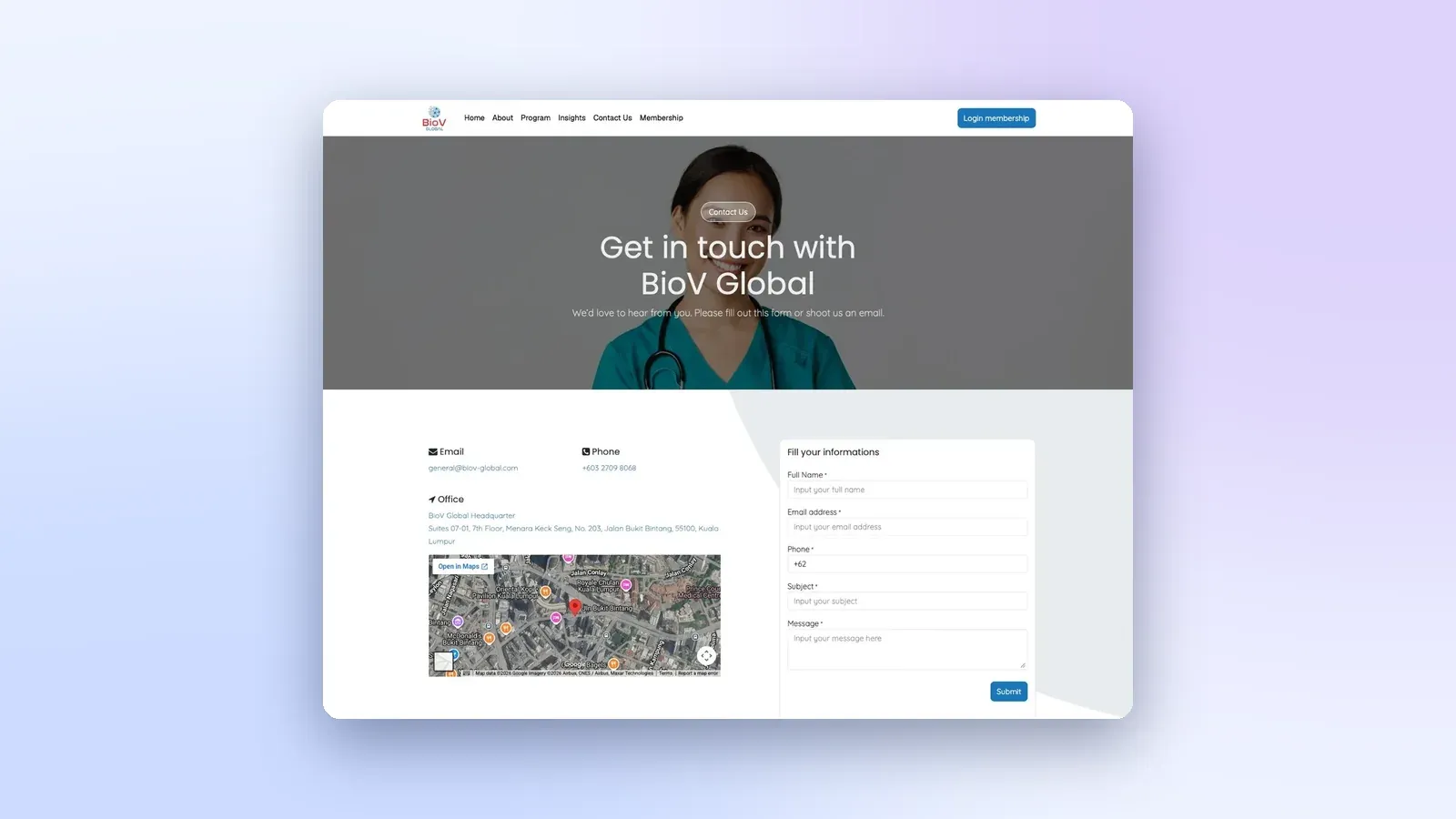
Through its Digital Transformation solutions, Digital Center Indonesia builds web, mobile, and tablet applications, including commerce platforms, along with system and API integration. For example, Bio-V's company profile website was built with the Odoo website builder so that website form submissions flow straight into Odoo CRM, while Tanam Emas and Ladara run on web and mobile with integrated multi-payment options. Our implementation principles: as standard as possible, delivered as fast as possible, and affordable.
Want to talk about a website for your business? Contact us at marketing@digitalcenter.id.